Almost every school gives some fee concessions: a discount for a second child, for the children of staff, for merit or for a family in difficulty. Very few schools write the rules down. The accountant remembers, the principal remembers differently, and a parent who hears about a neighbour's discount arrives asking why they did not get the same.
I run CrossKloud, and we sell school software, so read this with that in mind. But the policy below needs nothing more than a sheet of paper and a management meeting.
A concession is your school's decision
A concession is a decision your management takes, not something every family is automatically owed. That is exactly why it should be written down. Rules differ by state and by type of school, so check what your state education department and your trust or society require before you finalise anything, and have the management approve the final text.
What the policy should say
- Who qualifies. Siblings, children of teaching and non-teaching staff, merit, a single parent, or any other group you choose. Name each one.
- How much. A percentage or a fixed amount, and for each child in the order they joined if you differ by child. Do not leave it as "up to".
- Which fee heads. Many schools apply concessions to tuition only. State it. Admission, transport, exam and activity fees are separate heads, so say clearly whether the concession touches them.
- How long it lasts. For one session or for as long as the child studies. State what happens if the older sibling leaves, or the staff member resigns.
- How to apply. A written application, a last date and who approves it. A verbal request at the fee counter is how exceptions begin.
- Who can approve. A named person or a small committee, and not whoever happens to be at the counter.
- Review. Once a year, before the new fee structure is announced.
Keep a concession separate from a fee waiver
A concession reduces a fee that is normally due, by a rule. A write-off or waiver is a one-off decision to forgive an amount that is already due. Records stay clean when the two are kept apart, because later you can answer both "how much concession did we give this year?" and "how much did we forgive?"
Mistakes that cause arguments
- Giving a concession on the verbal say-so of one person.
- Applying it to a fee head the policy did not cover, because the parent asked.
- Forgetting to remove a concession when the condition ends, such as a staff member leaving.
- Having no total anywhere. The management should be able to see once a term how much has been conceded and to whom.
How this works in CrossKloud School
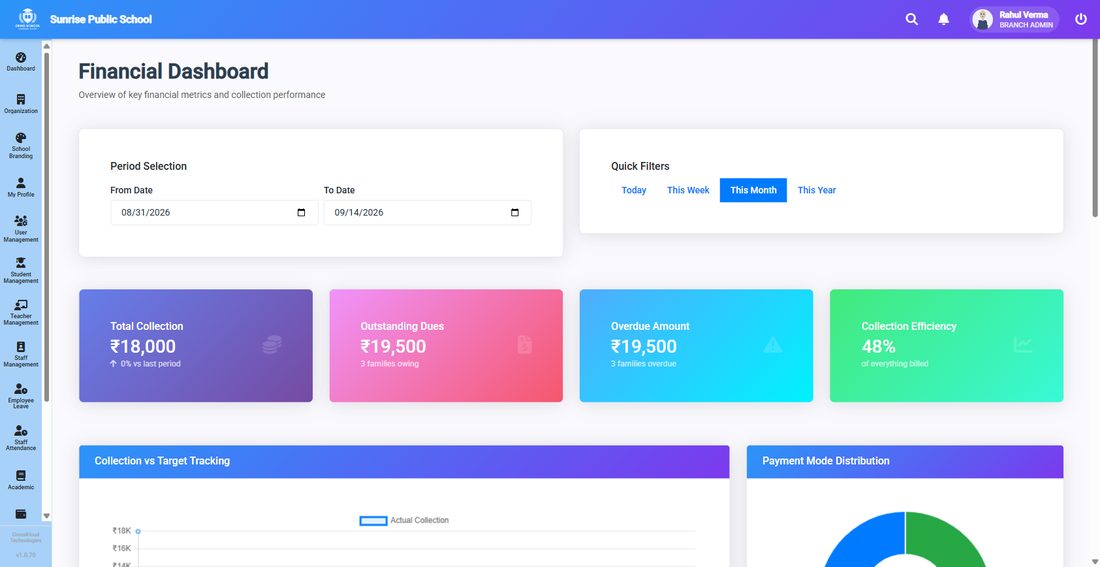
Once your policy is written, CrossKloud School lets the office apply concessions to a student's fees as part of fee management, alongside late fees, refunds and write-offs. Invoices and receipts come from the same place, a student's ledger shows what was charged and what was paid, and fee reports show who owes what. Parents see their own dues, invoices and receipts in the parent portal. Access to fee screens follows each staff member's role, so you decide who can open them.
To be clear about the limits: the software records concessions against a student's fees, but the policy itself, and who approves each concession, remain your school's decision. Scholarship applications and approval are not a module in CrossKloud School today.
If you want to see this with your own fee chart, book a free demo and bring your concession list. Related guides: school fee management, how to choose school ERP software and the true yearly price of a school ERP.