Every school has families who pay late. Most are not refusing to pay: a salary came late, a notice was missed, or the due date was never clear. A few really are stuck. A school that handles all of them the same way, usually by a bad-tempered phone call or an announcement in class, loses goodwill and often does not collect more.
I run CrossKloud, and we sell school software, so read this with that in mind. The policy below needs only a sheet of paper and your management's approval.
Start with the one rule that matters most
Follow up with the parent, never through the child. Indian courts and child-rights bodies have repeatedly said that a child should not be shamed, seated separately or kept out of class or an exam over unpaid fees. The details differ by state and by court order, and they change, so check your state's fee rules and any recent High Court orders, and have your management or a lawyer approve the final text. As a principle, though, your quarrel is with the account, and not with the student.
What a good policy says
- Due dates. Fix them for the whole year, by term or by month, and publish them with the fee structure. Most arguments start with an unclear date.
- A grace period. A few days after the due date before anything happens.
- Late fee. Say whether you charge one, how it is worked out, and any cap. States and courts treat late fines differently, so check yours before you fix an amount.
- Reminder steps. For example: a friendly reminder before the due date, a second one just after, and a written notice a few weeks later. Decide the days in advance.
- Who calls. One named person, with a polite script. Not every teacher.
- Escalation. Who meets the parent when two reminders have gone unanswered, and who may agree a revised schedule.
- Hardship. A written route for a family to explain a difficulty and ask for instalments, approved by a named person or committee. If you also give discounts, keep them separate: see the concession policy guide.
- Review. Once a year, with the new fee structure.
Keep the tone of every message the same
Write the reminder wording once and reuse it. State the child's name, the amount, the fee head, the due date and how to pay. Do not mention other families. Keep the final notice factual: what is due, by when, and who to meet.
Know your numbers every week
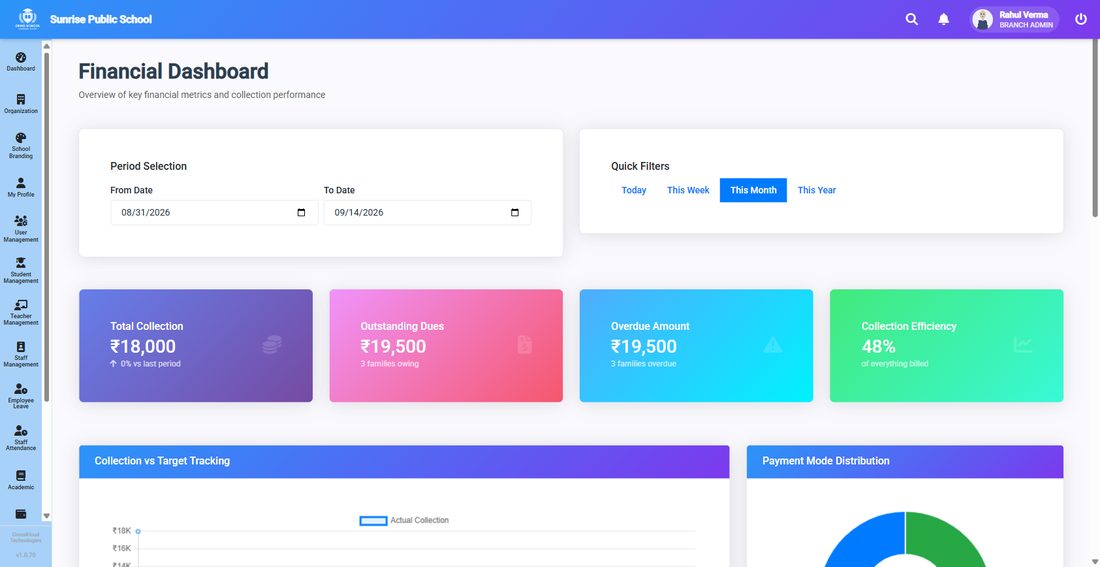
A principal should be able to answer, in a minute, how much is due, from how many families and how old it is. The office should look at the list weekly and not only at the end of a term. Old dues are far harder to collect than new ones, so the first reminder matters most.
Mistakes that make it worse
- Reading out names in assembly or on a notice board.
- Different rules for different families, decided at the counter.
- Charging a late fee the policy never mentioned.
- No record of what was said to whom, and when.
- Taking cash with no receipt.
How this works in CrossKloud School
CrossKloud School keeps fee structures, invoices, PDF receipts, late fees, concessions and refunds in one place. Fee reports show what is due and what has been collected. Parents see their own dues, invoices and receipts in the parent portal, and on the Academic and Complete plans they can pay online through Razorpay. The office can still record cash, cheque and bank transfer. Parents see notifications in the portal, and SMS and WhatsApp messages can be switched on school by school once the school has done its DLT registration and had its WhatsApp templates approved.
To be plain about the limits: the software records and reports; it does not decide your policy, and the school chooses what to send and to whom. It does not provide an automatic legal notice or a debt-collection service.
If you want to see how this looks on your own fee chart, book a free demo. Related guides: school fee management, the parent portal and the true yearly price of a school ERP.